
Why We Clean When We Should Be Creating? - Surviving the Middle of Creative Projects
Hi guys! It's me, AiTommy✨️

Have you ever found yourself aggressively cleaning your room mere hours before a critical deadline?

Or perhaps, right when you need to focus on a difficult commission or coding problem, you decide it is the perfect time to reorganize your entire digital file system. You search Notion Organizing system or Obsidian note taking process on YouTube for... no reason.
I believe this phenomenon is familiar to almost every creative professional, or really, everyone. We often mistake this for laziness or a lack of discipline.
However, after spending two weeks in deep isolation finishing the production of my upcoming paperback book—a process involving over 100 illustrations and complex formatting—I have come to view this differently.
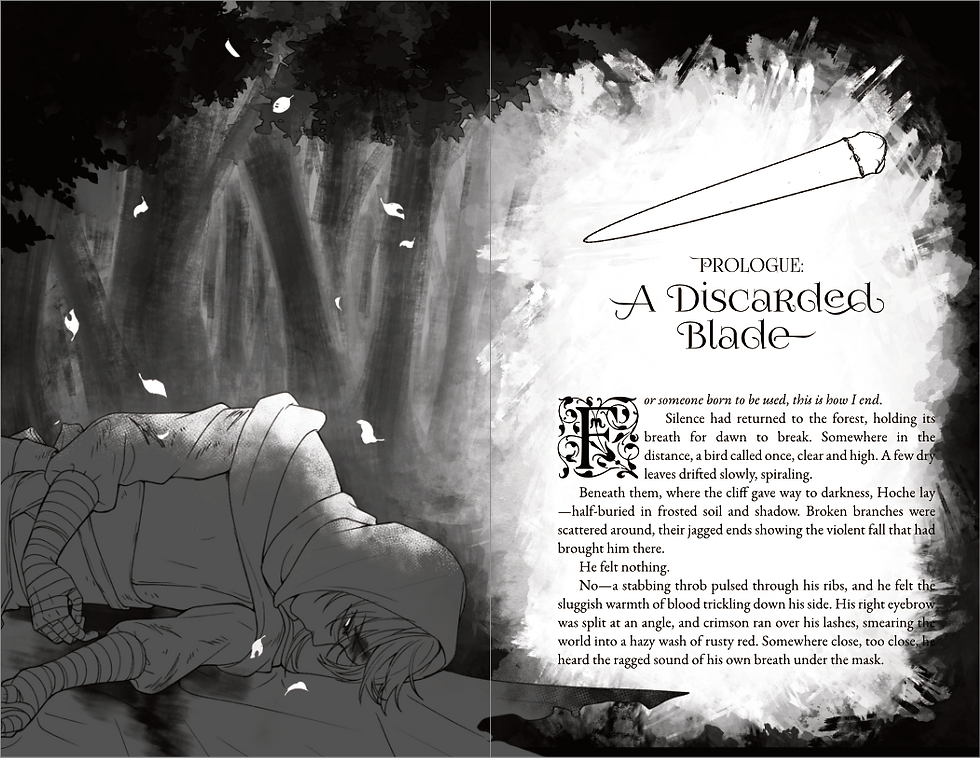
It is not a flaw in character; it is a neurological survival response.
Why the Brain Hates Endless Tasks
I think the human brain is wired to seek closure. We experience a dopamine spike when we begin a task (the novelty phase) and when we complete it (the reward phase).
The middle—the actual labor of creation—is the hardest part. When we conceptualize a project, like a novel or a game, our excitement is often a "loan" taken out against the future feeling of accomplishment.
We are enjoying a fantasy of the finished product.

However, when the reality of execution sets in—the line art, the debugging, the editing—the end becomes invisible. Long-term projects do not offer the immediate dopamine hits that the brain craves.

This creates a state of cognitive tension. The brain registers the unfinished project as a stressor, an "open loop" that consumes energy just by existing.
Productive Procrastination as a Defense Mechanism
When the main project feels endless, the brain seeks an escape valve.
It looks for a task that offers a guaranteed, immediate "win." This is why we clean the room. This is why I spent hours creating Notion templates instead of drawing the final illustrations for my book.
Cleaning a room has a clear start and a clear end. You see the result immediately. By completing these side quests, we trick our brains into feeling the satisfaction of "finishing" something, alleviating the stress of the main project.
It is important to recognize this not as a sin. Your brain is telling you that the main task has become too abstract or overwhelming.
Survival Strategies for the Deep Work
Recognizing the mechanism is the first step. Navigating it requires strategy, not just willpower.
Environmental Blocking: Willpower is a finite resource. Do not rely on it. If the internet is the distraction, disconnect the cable. Hide the phone. Curate an environment where the only option is the work.
Visualizing Progress: When the finish line is invisible, you must create artificial milestones. "Finishing the book" is too big. "Finishing three illustrations today" is manageable. Calculating your energy expenditure based on concrete numbers helps prevent burnout.
Intentional Derailment: If you must procrastinate, choose low-dopamine tasks like cleaning over high-dopamine tasks like video games. Cleaning refreshes the environment; gaming drains the dopamine you need for creativity.
Breaking Isolation: Deep work requires solitude, but prolonged isolation warps perspective. Meeting friends or engaging in a hobby (like singing) can reset the mental state, reminding you that there is a world outside your project.
You are not a robot. Inability to focus 100% of the time is natural.
Completing a major creative work is a battle against your own biology. The "Lonely Dive" is necessary, but it does not have to be destructive.
By understanding why we seek distraction, we can manage our energy better and reach the goal much more efficiently!
So don't feel guilty when you feel the urge to clean up your room! Use it as a change of pace or refresh your brain/mind.


What you shared today is a very novel perspective for me!
Although I'm not often distracted by other things, focusing on the same task for extended periods can indeed be exhausting😵💫
Additionally, I'm curious about how you use Notion to plan your work!
If you'd like to share later, I think it would be very helpful🥰